


If you are looking into Fotona 4D in Vancouver, here is the short version: it is a non-surgical laser facelift that uses two laser wavelengths across four treatment modes to tighten skin, rebuild collagen, and improve your facial appearance all without surgery, needles, or significant downtime.
The treatment works from the inside out. It starts with a painless intraoral step inside the mouth, then moves outward through the deeper layers of skin, and finishes with a surface polish. Each of the four steps targets a different depth and a different concern, from nasolabial folds and jowls to pigmentation, acne scars, and uneven texture.
Most people need three to five sessions spaced four to six weeks apart. Results appear gradually over two to three months as your body builds new collagen.
This blog covers everything: how the science works, what each treatment mode does, what to realistically expect, who makes a good candidate, how it compares to surgery and other options, and how to choose the right provider.
Your Skin Is Aging from the Inside, and Most Treatments Only Touch the Surface
Most people notice the signs before they fully understand what is causing them. A little softness along the jawline. Lines that did not used to be there. Skin that looks a bit tired even when you feel fine. These changes are real, and they happen to almost everyone.
Here is what is actually going on beneath the surface.
Your skin stays firm and bouncy because of two proteins: collagen and elastin. Collagen gives skin its structure and strength. Elastin allows it to snap back into place. When you are young, your body produces plenty of both. But starting in your mid-20s, collagen production begins to slow. By the time you reach your 40s, the difference becomes visible.
Less collagen means the skin has less internal scaffolding holding it up. Add in years of sun exposure, daily facial movements, gravity, and the natural breakdown of fat pads beneath the skin, and you get the full picture of why faces change over time.
The problem with most skincare products is that they work only on the top layer of skin. Moisturizers, serums, and even many laser treatments address the surface. They can improve texture and hydration, but they cannot reach the deeper structures where the real structural changes are happening.
This is the gap that Fotona 4D fills. It reaches where surface treatments simply cannot go deep into the skin and even beneath it to trigger the kind of collagen rebuilding that makes a real, lasting difference.
Meet Fotona 4D: The Laser Treatment That Has Quietly Changed the Game in Facial Rejuvenation.
Fotona 4D is a multi-mode laser treatment that delivers a full facial rejuvenation in a single session. It is sometimes called a non-surgical laser facelift, and that description is accurate. The goal is to achieve lifting, tightening, and volumizing results that people typically associate with surgical procedures, but without any incisions, anesthesia, or long recovery time.
The “4D” in the name refers to the four dimensions or four distinct treatment modes that the system uses. Each mode targets a different depth of tissue and a different set of skin concerns. Together, they work in a layered, synergistic way to address aging from multiple angles at once.
What makes Fotona 4D genuinely different from most other laser treatments is the inside-out approach. It does not just treat the face from the outside. It begins inside the oral cavity, inside the mouth, and works outward through the tissue layers to the skin surface. This allows it to reach and stimulate tissue that external-only lasers simply cannot access.
The treatment uses a medical-grade laser system developed by Fotona, a Slovenian company that has been at the forefront of laser technology in medicine and aesthetics for over 60 years. Their platform is used by clinicians across 80 countries and is well-regarded in the field of aesthetic medicine for its precision, safety profile, and versatility.
 Four Laser Dimensions: The Science That Makes Fotona 4D Work
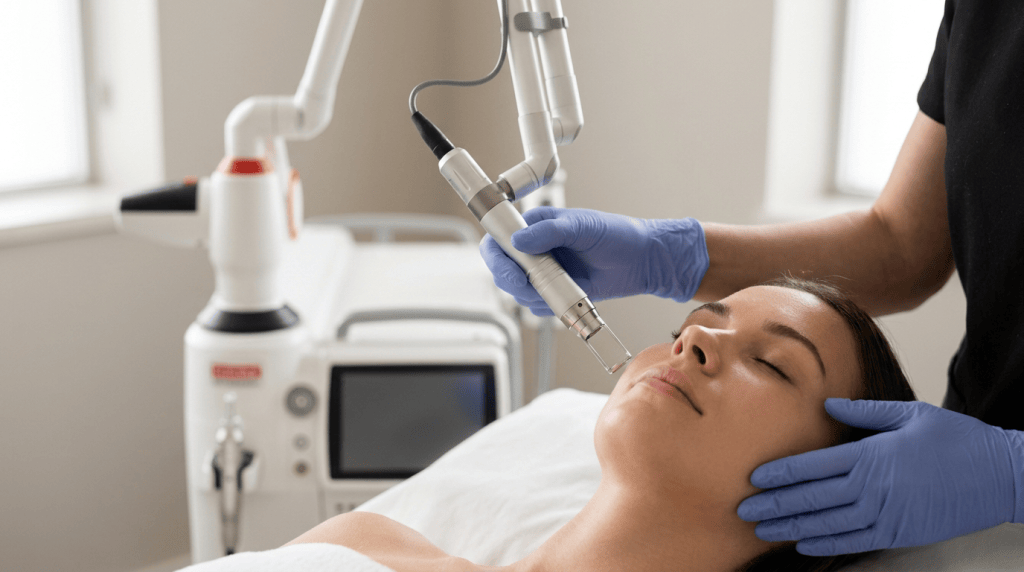 Four Laser Dimensions: The Science That Makes Fotona 4D Work
To understand why Fotona 4D works so well, you need to know a little about the technology behind it. Do not worry, this is simpler than it sounds.
The system uses two specific laser wavelengths: Nd:YAG and Er: YAG. These are two different types of laser energy, and they behave differently when they enter the skin.
The Nd: YAG laser has a longer wavelength. This means it can travel deeper into the tissue without damaging the surface. It is ideal for heating the deeper layers of skin and the tissue beneath it, which is where collagen lives and where the structural changes of aging happen.
The Er: YAG laser has a shorter wavelength. It works closer to the surface, where it can gently remove outer skin layers and deliver precise, controlled energy to the upper dermis. It is the tool used for surface refinement and the intraoral step.
Together, these two wavelengths cover every layer of the skin from the oral mucosa and deep connective tissue all the way up to the outermost surface.
The key mechanism driving results is full-thickness collagen contraction. When laser heat reaches collagen fibers, two things happen. First, existing collagen fibers immediately contract and tighten. You can actually see and feel this as an immediate firming effect right after treatment. Second, the heat signals the body to begin producing new collagen as part of its natural repair response. This new collagen gradually builds over the weeks and months following treatment, which is why results continue to improve long after the session is done.
The same principle applies to elastin. As new collagen forms, the skin also regains some of its natural elasticity, which contributes to a firmer, more lifted appearance over time.
The Four Treatment Modes Explained: What Each Step Does and Why It Matters.
This is the heart of the treatment. Each of the four modes in Fotona 4D serves a specific purpose, and together they create a complete, layered result that no single-mode treatment can replicate.
Step 1: SmoothLiftin
This is the intraoral laser treatment, the step that goes inside the mouth. A small handpiece delivers Er: YAG laser energy to the oral mucosa, which is the soft tissue lining the inside of the cheeks and mouth.
This might sound unusual, but it makes a lot of sense anatomically. The tissue directly beneath the skin of the lower face, around the jawline, jowls, nasolabial folds, and marionette lines, is accessible from inside the mouth. By heating this tissue from within, the treatment stimulates collagen contraction and new collagen production in exactly the areas where facial sagging tends to be most visible.
The result is a plumping and tightening effect in the lower and mid-face, achieved from the inside out. Most people find this step completely comfortable. There is no pain, no anesthesia needed, and the sensation is typically described as a mild warmth.
Step 2: FRAC3
The second step uses Nd: YAG laser energy delivered in a fractional pattern. This means the laser targets thousands of tiny micro-columns within the skin, leaving the surrounding tissue intact. This fractional approach allows deeper penetration while keeping recovery time minimal.
FRAC3 is the step that targets deeper imperfections, things like pigmentation, sun damage, background redness, and uneven skin tone. It reaches the mid-layers of the dermis where these concerns originate and begins the process of breaking them down and triggering the skin’s repair response.
This step improves overall skin quality and gives the complexion a more even, refined look.
Step 3: PIANO Mode Skin Tightening
The third step uses ultra-long Nd: YAG laser pulses applied in a slow, sweeping motion across the full face. This is the bulk heating step. The laser safely and rapidly heats a large volume of tissue beneath the skin, concentrating energy in the areas where skin laxity is most significant.
PIANO mode is particularly effective for lifting and tightening the cheeks, jawline, and neck. The heat causes immediate collagen contraction across a broad area and stimulates ongoing collagen production in the deeper layers. This is the step most responsible for the overall lifting and firming effect.
The sensation during PIANO mode is a warm, sweeping heat, almost like a hot stone massage across the face. Most people find it comfortable and even relaxing.
Step 4: SupErficial Laser Peel
The final step is a light surface laser peel using Er: YAG energy. It gently removes the outermost layer of dead skin cells, revealing fresher, brighter skin underneath. This step also minimizes the appearance of fine lines, tightens pores, and gives the skin an immediate healthy glow.
Think of this step as the finishing polish. The first three steps have done the deeper structural work. SupErficial refines the surface and delivers the immediate visible result, the brightness and smoothness that people often notice right after their treatment.
From Jowls to Pigmentation: The Skin Concerns Fotona 4D Is Built to Address
One of the reasons Fotona 4D has gained such a strong reputation is its versatility. Because it works across multiple depths of tissue and uses four distinct treatment modes, it can address a wide range of concerns in a single session.
Here is what the treatment is specifically designed to improve.
Skin laxity is the primary concern the treatment targets. When skin loses firmness and starts to sag, especially along the jawline, cheeks, and neck, Fotona 4D works to tighten and lift from beneath the surface.
Nasolabial folds, also known as smile lines, are the creases that run from the sides of the nose down to the corners of the mouth. These deepen as facial volume shifts with age. The SmoothLiftin intraoral step specifically targets this area by stimulating collagen production in the tissue directly beneath these folds.
Marionette lines run downward from the corners of the mouth toward the chin, giving the face a downturned appearance. Like nasolabial folds, these respond well to the inside-out collagen stimulation of the SmoothLiftin step.
Jowls form when the skin and tissue along the lower jawline begin to sag downward. The PIANO mode bulk heating step is particularly effective at tightening this area.
Uneven skin tone and texture, including dull or rough skin, are improved by both the FRAC3 step and the SupErficial surface peel.
Fine lines and wrinkles across the face and around the mouth benefit from the collagen stimulation of all four steps combined.
Volume loss in the cheeks and mid-face responds to the SmoothLiftin intraoral approach, which creates a gentle plumping effect by stimulating tissue from within.
What Actually Happens During a Fotona 4D Session: A Clear, Step-by-Step Walkthrough
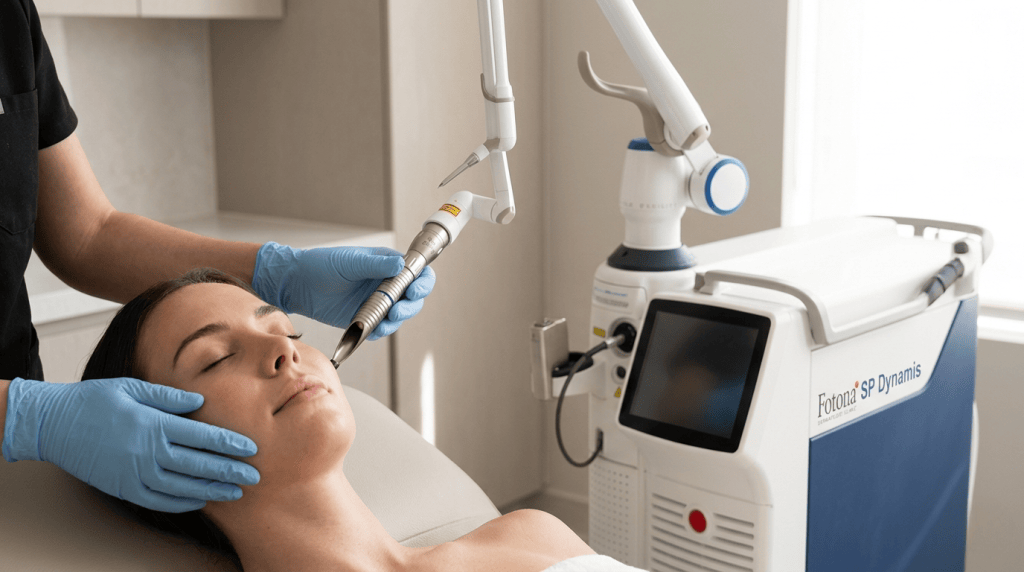 If you have never had a laser treatment before, walking into a session can feel a little intimidating. Here is exactly what to expect, so there are no surprises.
Your session begins with a consultation or a pre-treatment check-in. The provider reviews your skin concerns, confirms you are prepared for treatment, and discusses the settings they plan to use. Settings are adjustable based on your skin type, sensitivity, and specific goals.
The treatment itself takes about 60 minutes from start to finish, depending on the areas treated and the number of steps included.
During the intraoral SmoothLiftin step, a small handpiece is gently placed inside the mouth. The sensation is a mild warmth. There is no pain.
During the FRAC3 step, you may feel a light prickling or warmth as the fractional laser works across the skin. This step moves quickly.
During the PIANO step, the provider moves the handpiece in slow, brushing motions across the face. The sensation is a comfortable, rolling heat.
During the SupErficial peel, a light tingling or warmth is typical. This step also moves quickly.
After the session, your skin will likely appear slightly pink and feel warm, similar to a mild sunburn. This typically fades within a few hours. You can go about your day normally right after the treatment. Most people resume regular activities the same day.
Real Result: What Fotona 4D Can Do for Your Skin and How Long It Lasts
Let’s be direct about what you can expect.
Most people notice an immediate improvement right after their first session. The skin looks brighter, feels tighter, and has a noticeable healthy glow from the SupErficial peel. This initial result is real, but it is just the beginning.
The deeper results of the lifting, firming, and volumizing effects develop gradually over the following weeks and months as your body builds new collagen. Most patients see the full effect of a session around the six to eight week mark, with continued improvement through two to three months.
This is why a course of treatments is recommended rather than a single session. Each session builds on the last. By the end of a full course, the cumulative collagen rebuilding creates results that are noticeably more significant than any single treatment could achieve alone.
For optimal results, most providers recommend three to five sessions spaced four to six weeks apart. The exact number depends on your age, skin condition, the severity of your concerns, and how your skin responds to treatment.
In terms of how long the results last, most people enjoy visible improvement for a year or more after completing their treatment course. Skin continues to age naturally, so maintenance sessions help sustain and extend the results over time.
Before and after photos from Fotona 4D patients show improvements in jawline definition, reduction in nasolabial fold depth, smoother skin texture, and an overall more lifted and refreshed appearance.
Downtime, Redness, and Side Effects: Here Is What Most People Actually Experience
This is one of the most appealing aspects of Fotona 4D: the recovery is minimal.
Most people experience some mild redness and a feeling of warmth in the treated area for a few hours after the session. This is a normal skin response and settles on its own. By the next morning, most patients look completely normal.
Some people notice mild peeling or flaking a few days after treatment, particularly following higher intensity sessions. This is the skin shedding the outer layer that was treated during the SupErficial step. It is a sign that the skin is renewing itself and should not be picked or irritated.
Swelling, if it occurs at all, is typically very mild and resolves within one to two days.
Serious side effects are uncommon when the treatment is performed by a qualified laser technician or provider. The system is designed with built-in safety parameters, and settings are always adjusted to suit the individual patient’s skin type and tolerance.
Post-treatment care is straightforward. Keep the skin clean and well hydrated. Avoid harsh skincare products with active ingredients for a few days. Most importantly, apply a broad-spectrum SPF of at least 50 every time you go outside. Sun protection after any laser treatment is not optional; it protects the newly sensitized skin and helps preserve the results.
Avoid excessive heat exposure, such as saunas, hot yoga, and steam rooms, for 48 hours after treatment.
Are You a Good Candidate for Fotona 4D in Vancouver?
Fotona 4D works well for a broad range of people, and one of its strengths is that it is suitable for all skin types, including medium and darker skin tones that can sometimes be more sensitive to certain laser treatments.
You are likely a good candidate if you have mild to moderate skin laxity and want to address it without surgery. If you are starting to notice changes in your jawline, nasolabial folds, or overall skin firmness, and you want a real solution that goes beyond what skincare products can offer, Fotona 4D is worth a serious look.
It works well for people in their 30s, 40s, and 50s who are in the early to moderate stages of facial aging. Younger people sometimes use it proactively to slow the visible signs of aging before they become more pronounced. Older people with more significant concerns can also benefit, though the degree of improvement may vary.
You may not be an ideal candidate if you have very advanced skin laxity with significant excess skin; in those cases, a surgical consultation may be more appropriate. You should also inform your provider about any active skin conditions, recent cosmetic treatments, medications, or medical history before proceeding.
In Vancouver, British Columbia, the demand for this treatment has grown significantly as more people look for effective non-surgical options that fit into a busy lifestyle. A proper consultation with a knowledgeable provider is the best way to confirm whether Fotona 4D is right for your specific skin and goals.
Fotona 4D vs. Surgical Facelift, Fillers, and Morpheus8: Which One Is Actually Right for You?
This is a question that comes up often, and the answer depends entirely on where you are in your skin journey and what your goals are.
Fotona 4D vs. Surgical Facelift
A surgical facelift involves incisions, anesthesia, weeks of recovery, and a significant financial investment often exceeding ten thousand dollars. The results can be dramatic and long-lasting, sometimes for a decade or more. But surgery carries real risks, including scarring, infection, anesthesia complications, and the possibility of an unnatural appearance if not done well.
Fotona 4D offers a genuine alternative for people who are not ready for surgery or who want to avoid it entirely. The results are more subtle and require ongoing maintenance, but there are no incisions, no anesthesia, no recovery time, and a much lower risk profile. For people with mild to moderate aging concerns, it can deliver results that are truly meaningful.
Fotona 4D vs. Dermal Fillers and Botox
Dermal fillers add volume to specific areas of the face. Botulinum toxin relaxes muscles to soften expression lines. Both are effective tools, but they work differently from Fotona 4D. Fillers and Botox introduce external substances into the skin. Fotona 4D stimulates your own body to rebuild collagen and produce natural tissue improvement. The two approaches are not mutually exclusive; some people prefer a combination of laser treatments and injectables for a more comprehensive result.
Fotona 4D vs. Morpheus8
Morpheus8 combines microneedling with radiofrequency energy to stimulate collagen and tighten skin. It is an effective treatment, particularly for skin texture and mild laxity. The main difference is that Morpheus8 works only from the outside in and involves micro-injuries to the skin, which means slightly more downtime. Fotona 4D’s inside-out intraoral approach allows it to reach tissue that Morpheus8 simply cannot access. For some patients, combining both treatments produces the most comprehensive results.
Fotona 4D vs. IPL and Microneedling
IPL (intense pulsed light) is excellent for targeting surface pigmentation and redness, but does not address skin laxity or deep structural aging. Microneedling stimulates surface collagen but works at a shallower depth than Fotona 4D. Both are good treatments for specific concerns, but neither offers the same depth or breadth of results as Fotona 4D for patients primarily concerned with lifting and tightening.
How Many Sessions Do You Need and What Should You Look for in a Provider?
The number of sessions you need depends on your starting point and your goals. As a general guideline, most providers recommend three to five sessions spaced four to six weeks apart for a full initial treatment course.
Younger patients with early aging concerns may see strong results with just two to three sessions. Older patients or those with more significant concerns may benefit from a longer course. Your provider will give you a personalized recommendation during your consultation.
After completing your initial course, most people schedule a top-up session after 8-12 months to maintain results. The good news is that each maintenance session adds to the cumulative collagen rebuilding in your skin, so results tend to stay consistent or even continue to improve with regular treatments.
When it comes to choosing a provider, this matters more than most people realize. Fotona 4D is a powerful, multi-step treatment, and the outcome depends heavily on the skill, training, and experience of the person performing it.
Look for a clinic with certified, experienced laser technicians who have specific training on the Fotona platform. Ask about their experience with the treatment, ask to see before and after photos of their actual patients, and pay attention to how thoroughly they conduct the consultation. A trustworthy provider will always assess your skin carefully, explain realistic expectations, and tell you honestly if a different treatment would suit your goals better.
Be cautious of providers who rush through consultations, cannot show you real patient results, or seem to use a one-size-fits-all approach. Good laser treatment is always personalized.
At Ovo Medi Spa in Vancouver, every Fotona 4D treatment begins with a thorough skin assessment and a personalized treatment plan. The focus is on delivering results that look natural and suit each patient, not a generic approach applied to everyone who walks through the door.
Fotona 4D package pricing varies depending on the number of sessions included and the clinic’s location and expertise level. It is worth investing in a qualified, experienced provider rather than choosing purely on price. A poorly executed laser treatment can deliver underwhelming results or, in rare cases, complications that require correction.
Conclusion
Fotona 4D is one of the most complete non-surgical facial rejuvenation treatments available today. It does something that very few other treatments can do: it works across every layer of the skin, from deep connective tissue all the way to the surface, using a combination of two laser wavelengths and four precisely targeted treatment modes.
The results are real. The science is solid. The downtime is minimal. And for the right candidate, someone with mild to moderate signs of facial aging who wants meaningful improvement without surgery, it can make a genuinely significant difference in how they look and feel.
It is not a magic fix, and it is not a permanent solution. But as part of a thoughtful, ongoing approach to skin health, it is one of the most effective tools available in non-surgical aesthetic medicine today.
If you are curious about whether Fotona 4D is the right fit for your skin and your goals, the best next step is a consultation with a qualified provider. Book a consultation with Ovo Medi Spa in Vancouver today and get a clear, honest assessment of what this treatment can realistically do for you. No pressure, no guesswork, just a straightforward conversation about your skin and the best way to care for it.
Frequently Asked Questions
Is the intraoral step safe, and what does it feel like?
Yes, it is completely safe and painless. Most patients feel only a gentle warmth. No anesthesia is needed, and there is no risk to teeth or gums.
Can Fotona 4D be combined with fillers or Botox?
Yes, but timing matters. Most providers recommend spacing injectables 2 weeks after your Fotona 4D session for the best possible results.
How is Fotona 4D different from Morpheus8?
Both tighten skin effectively, but Fotona 4D reaches deeper tissue through its intraoral step, giving it a clear advantage for jawline lifting and lower face rejuvenation.
When can I wear makeup after my Fotona 4D session?
Makeup is fine within 24 hours. Avoid active ingredients like retinol and exfoliants for three to five days, and always apply SPF 50 every 2 hours when you are outside or sitting by the window.
Does Fotona 4D work on all skin tones?
Yes. The Nd: YAG wavelength bypasses surface melanin and targets deeper tissue, making Fotona 4D safe and effective across all skin tones when performed by a qualified provider.


